

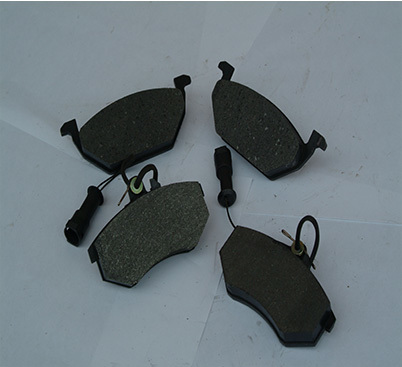
Audi, Volkswagen front brake pad D1029
Product compliance ISO9001:2015 quality management system
Number:
D1029
Material:
Color:
Unit price:
650
Model:
Key words:
Audi, Volkswagen front brake pad D1029
Classification:
Product Description
- 2008 Audi R8 4.2 FSI
- 2009 Audi R8 4.2 FSI
- 2010 Audi R8 4.2 FSI
- 2010 Audi R8 5.2 FSI
- 2011 Audi R8 5.2 FSI
- 2012 Audi R8 5.2 FSI
- 2013 Audi R8 5.2 FSI
- 2012 Audi RS5 Coupe 4.2 FSI
- 2013 Audi RS5 Coupe 4.2 FSI
- 2014 Audi RS5 Coupe 4.2 FSI
- 2007 Audi S5 Coupe 4.2 FSI
- 2008 Audi S5 Coupe 4.2 FSI
- 2009 Audi S5 Coupe 4.2 FSI
- 2010 Audi S5 Coupe 4.2 FSI
- 2011 Audi S5 Coupe 4.2 FSI
- 2012 Audi S5 Coupe 4.2 FSI
- 2002 Volkswagen Phaeton 6.0
- 2003 Volkswagen Phaeton 6.0
- 2004 Volkswagen Phaeton 6.0
- 2005 Volkswagen Phaeton 6.0
- 2006 Volkswagen Phaeton 6.0
- 2007 Volkswagen Phaeton 6.0
- 2008 Volkswagen Phaeton 6.0
- 2009 Volkswagen Phaeton 6.0
- 2010 Volkswagen Phaeton 6.0
- 2011 Volkswagen Phaeton 6.0
- 2012 Volkswagen Phaeton 6.0
- 2013 Volkswagen Phaeton 6.0
As an important part of automobile braking system, brake pads have many remarkable characteristics, which ensure the key role of brake pads in driving safety. The following are some of the main features of brake pads:
Excellent friction performance: The main function of the brake pads is to convert the kinetic energy of the vehicle into heat energy through friction, so as to achieve deceleration or parking. Therefore, the brake pads must have excellent friction performance to ensure that sufficient friction can be provided during braking to quickly decelerate the vehicle.
High temperature resistance: During braking, the brake pads will generate a lot of heat. If the brake pads cannot withstand high temperatures, it may cause their performance to decrease or fail. Therefore, the brake pads must have good high temperature resistance to ensure a stable braking effect in high temperature environments.
Strong wear resistance: The brake pads will continue to wear during use, so they need to have high wear resistance. The wear-resistant brake pads can extend the service life, reduce the frequency of replacement, and reduce maintenance costs.
Safety and environmental protection: The brake pads may produce noise, dust and other pollutants during the braking process, which will have a certain impact on the environment and human health. Therefore, modern brake pads pay attention to environmental performance in the design and manufacturing process, using low-noise, low-dust materials and processes to ensure driving safety while reducing environmental pollution.
Adaptability: different models, different use scenarios of brake pads demand different. Therefore, the brake pads need to have a strong adaptability to meet the needs of different vehicles and conditions of use. This includes the adaptability of the size, shape and material of the brake pads.
In summary, the brake pad has the characteristics of excellent friction performance, high temperature resistance, strong wear resistance, safety and environmental protection, and strong adaptability. These features together ensure the key role of brake pads in driving safety and provide reliable braking protection for drivers.
Related Products
Welcome your message consultation
Quanzhou Qixing Brake Equipment Co., Ltd.
Tel: +86-595-23861456
E-Mail: 1037155926@qq.com
Address: Bangde Industrial Zone, Yongchun County, Quanzhou City, Fujian Province
Website:www.qzqx.cn

Sweep the mobile phone browsing
Copyright©2019 Quanzhou Qixing Brake Equipment Co., Ltd. Powered by www.300.cn | Label